Monday, March 23, 2020

7 | The War on Normal People by Andrew Yang

I am literally the worst about these posts right now. I've been reading more, but with all the COVID-19 stuff going on, I haven't had time or access to my computer to write these posts. So, here we go: week 12 and review 7... Grace!

In light of the upcoming 2020 US Presidential Election, I thought it would be fun to read a book by one of Trump's (now former) challengers, Andrew Yang. Throughout the debates, I was always interested in his POV on things because his campaign seemed considerably more moderate than many of his left-wing competitors and the problems he discussed seemed so much more relevant than what we typically hear from politicians.

As a disclaimer, this post is not meant to push his viewpoint or anything political like that; it is merely another review of one of my (hopefully) 52 books for the year!

THE WAR ON NORMAL PEOPLE | ANDREW YANG

Image result for andrew yang the war on normal people

The book's full title includes a subtitle: The Truth about America's Disappearing Jobs and Why Universal Basic Income is our Future. Everything about this title is provocative! It is challenging the current way we understand our changing economy and suggesting a completely different economic system (i.e., replacing the idea that money is the measure of a healthy economy with the idea that healthy people are). Yang divides the book into three main parts: 1. What's happening to jobs? 2. What's happening to us? 3. Solutions and Human Capitalism.

The first section discusses automation and how the "normal" American will be affected by it. Honestly, I expected to hear more about Amazon in this section as that is what Yang spends the bulk of his speeches discussing. First, he describes what exactly he means by "normal:"

"The normal American did not graduate from college and doesn't have an associate's degree. He or she perhaps attended college for one year or graduated from high school. She or he has a net worth of approximately $36K--about $6K excluding home or vehicle equity--and lives paycheck to paycheck. She or he has less than $500 in flexible savings and minimal assets invested in the stock market. These are median statistics, with 50 percent of Americans below these levels."

As is typical throughout the book, Yang showed considerable data supporting these claims in the form of graphs, charts, and quotes from experts. Reading about the "normal" American really did a lot to open my eyes to my own affluence and privilege. I have felt very average as far as academic or economic success, but as a family with 2 master's degrees and a home I can see we live in a different world than a lot of other Americans. For a lot of my life I have felt like people who can't afford a $500 expense need to improve their money management skills, but this notion of "normal" helped me see things from a different point of view.

My biggest take away from this sections was his analysis of how the 5 largest occupations in the US--office and administrative support, sales and retail, food preparation and serving, transportation and material moving, and production--which employ 68 out of 140 million Americans (i.e., 48.5 percent) are going to be impacted by automation. Many of these jobs are comprised of tasks that are "highly repetitive and automatable."

The main job category Yang is concerned about is the 3.5 million-worker trucking industry. With self-driving trucks less than a decade away, Yang argues that trucking is not long for this country. What's worse, is that "as many as 7.2 million workers serve the needs of truck drivers at truck stops, diners, motels, and other businesses around the country." That is a total of over 10 million people who would be devastated by this kind of progress in automation. Imagine a world where these jobs dry up in under a year or two as companies make the changes necessary to save money and increase their bottom line!

I was surprised to continue reading about the potential for automation to impact even white collar jobs, such as counseling, practicing medicine, financial advising, etc. Honestly, in the grim world Yang is depicting, it seems as though the only jobs that are safe are technology development.

In part two, Yang discusses how these changes are and will impact humanity. Among other things, he discusses the consolidation of the wealthy in six major cities and the impact of unemployment and underemployment--particularly on men; however, what stood out most to me was his discussion on mindsets of scarcity and abundance.

"Scarcity has a profound impact on one's worldview. Eldar Shafir, a Princeton psychologist, and Sendhil Mullainathan, a Harvard economist, conducted a series of studies on the effects of various forms of scarcity on the poor. They found that poor people and well-off people perform very similarly on tests of fluid intelligence, a generalized measurement that corresponds to IQ. But if each group was forced to consider how to pay an unexpected car bill of $3,000 just before taking the test, the poor group would underperform by the equivalent of 13 IQ points, almost one full standard deviation. ... Activating scarcity through a hypothetical expense was also found to reduce correct responses on a self-control test from 83 to 63 percent among the less well-off participants, with no effect on the well-off. A mindset of scarcity is more than just 'stress'--it actually makes one less rational and more impulsive by consuming bandwidth."

I think seeing this study, along with several others he included, in concert with his definition of who the statistically normal American is really convicted me of some judgments and prejudices I have held toward people who are poorer than I am. What do you think about these ideas?

The final section of The War on Normal People discusses some of Yang's solutions to these problems: Universal Basic Income (AKA the Freedom Dividend), Medicare for All, Social Credits, and Human Capitalism. His main principles guiding this plan are 1) Humanity is more important than money. 2) The unit of an economy is each person, not each dollar. and 3) Markets exist to serve our common goals and values. I think these three principles could be developed a bit for clarity, but on the whole I support the premise of elevating the value of a human above the value of dollars. While some of his strategies and solutions are very interesting to me, as a fiscal conservative, I still have a good deal to wrap my mind around. In conclusion, Yang exhorts us:

"The age of automation will lead to many very bad things. But it will also potentially push us to delve more deeply into what makes us human. ... Through all of the doubt, the cynicism, the ridicule, the hatred and anger, we must fight for the world that is still possible. ... What makes you human? The better world is still possible. Come fight with me."

This book left me feeling a bit grim about the future to be honest; however, it also left me with a sense of urgency to love and serve those around me and to seek out and support elected officials who want to do the same.

Conclusion: Would read parts again for reference. Would recommend to a select audience. 7/10.

I'm thinking of reading Milton Freedman's Free to Choose next to get a conservative perspective on the economy. You know what they say... "The one who states his case first seems right, until the other comes and examines him." Proverbs 18:17

Wednesday, March 4, 2020

6 | Reading Lolita in Tehran by Azar Nafisi

I know what you're thinking: Boy, Jenn, you're off to a great start by taking off all of February! (Is it rude to assume that my readers--that probably don't even exist--are passive aggressive?) Confession: Between a car accident and a sick baby, it took me all of February to read a not-very-long memoir. There's grace for that, right? (Read: a series of short books are coming soon--haha!)

Vladimir Nabokov's Lolita is a tale of an older man who takes a twelve-year-old girl captive for two years and rapes her. This is a demented idea, but, as Azar Nafisi draws out, it has something profound to say about humanity in general. Reading Lolita is a provocative idea in general, but the idea of reading it in Tehran is altogether outlandish! When I saw this book in one of the little free libraries in Fort Worth (anyone else love these little give-a-book-take-a-book stops?) I was instantly intrigued!

Before taking it home, I read the author's synopsis on the back cover: It detailed a weekly gathering of women who secretly studied literature in Tehran. Always having dreamt of participating in a book club, I knew a historical novel about a book club of rebellious women was right up my alley! (As an aside, does anyone want to join a book club with me?)

READING LOLITA IN TEHRAN | AZAR NAFISI

Image result for reading lolita in tehran

Nafisi begins by explaining that no novel can ever truly represent a reality. Instead, novels--good ones, anyway--reflect truths that apply much more broadly to the human condition. This book is made up of several parts, each named to reflect another book. Part I is entitled "Lolita." She notes that of any work of fiction, Lolita is the one that best encompasses life inside the Islamic Republic of Iran. This book, but more precisely the entire corpus of Nabokov's works, shape the first part of Nafisi's novel. She answers the question: Why Lolita in Tehran?

"I want to emphasize ... that we were not Lolita, the Ayatollah was not Humbert and this republic was not a critique of the Islamic Republic, but it went against the grain of all totalitarian perspectives." She goes on to say, "The desperate truth of Lolita's story is not the rape of a twelve-year-old girl by a dirty man but the confiscation of one individual's life by another."

The ideas Nafisi draws out of Nabokov's Lolita, among other works, relate to Nafisi's own struggle to cope with her situation in Tehran. Nafisi takes hold of Nabokov's Lolita and An Invitation to a Beheading and shows how what really happens in the relationship between the oppressed and the oppressor is the loss of the individuality of the oppressed--this is what is being taken from women in Tehran, she argues. Her students struggle with a class between who they want to be, who they are in the "magical" living room the literature class meets in, and who they are forced to be in public, hidden under veils and robes.

"The only way to leave the circle, to stop dancing with the jailer, is to find a way to preserve one's individuality, that unique quality which evades description but differentiates one human being from the other."

The only way for the oppressed to escape becoming identified only as the oppressor sees her is to hold fast to the subtle idiosyncrasies that make her herself. As far as I can tell, this is the purpose of the literature class: it is an opportunity for the participants to remember what makes them who they are, even underneath the thick black robes of the totalitarian regime.

As someone who is not held under a totalitarian regime, I think my big take away from this section of the book is that in the mundane routine of life, which can at times seem particularly repetitive and deterministic as a stay at home mom, it is important to hang on to things that make you take hold of who you are. For me, that has been music, art, embroidery, reading, and writing! As simple as this blog is, it helps me maintain my grasp on what makes me me!

I spent a considerable amount of time on part one of the text, as Lolita is the book Nafisi says most describes the Islamic Republic of Iran; however, in hopes of this post being a readable length, I will be more brief in summarizing the remaining three sections.

Part two of the book takes us back in time and is perhaps even more fascinating than part one--it is about Nafisi's experience as a professor at the U of Tehran during the Islamic Revolution in Iran, told through the lens of The Great Gatsby. My husband and I are total nerds; we just watched a documentary about the change in power from the Shah to the Ayatollah, so it was exciting to read a first-hand account of it!

During a lecture series at the U of Tehran, Nafisi explains to her students that Gatsby is best described by the unifying theme of loss--specifically, the loss of a dream. She relates Gatsby's ultimate demise to the future she foresaw for Iran:

"He [Gatsby] wanted to fulfill his past dream by repeating the past, and in the end he discovered that the past was dead, the present a sham, and there was no future. Was this not similar to our revolution, which had come in the name of our collective past and had wrecked our lives in the name of a dream?"

The last two sections of the book, on James and Austen, struck me for a few reasons. Both emphasized the unique role of a heroine who is not what one might expect. Daisy Miller, for example, is James' heroine who possesses none of the desired qualities of a protagonist: she is unattractive, of less than average intelligence, and other unamiable qualities you may be imagining. At the same time, the antagonists had very attractive qualities. So, how did Daisy Miller manage to be the protagonist? Empathy. This is the trait that makes a good protagonist and, according to Nafisi, a good novel. I've never thought about this in such explicit terms before, but I tend to agree.

Nafisi also showed how James and Austen used quite mundane scenarios to set their novels; this is quite a turn from the racy Nabokov or the flamboyant Fitzgerald. The villains don't appear as boldly as Humbert in Lolita, but they create vile scenarios for the protagonist nonetheless.

Part three was one of  the more interesting sections for me to read because Nafisi shared a lot about her experience living under the Islamic Republic's rule, the death of the Ayatollah Khomeini, and Iran after his death. I feel like my understanding of Iran really grew through reading this book and did a lot to open my eyes to different opinions about the Islamic Republic from within Iran. Probably the most impactful way she did this was by talking about her students and the way they survived the changes and restrictions.

Conclusion:
Would read again. Everyone should read this and expand their perspectives on the Middle East and Islamic culture. 9/10.

Sunday, February 2, 2020

5 | Life Together by Dietrich Bonhoeffer

I always thought my first Bonhoeffer book would be his Ethics, but here we are! My church encouraged life group leaders to read Bonhoeffer's Life Together, and, while I am not a leader, I think understanding more about biblical community is important! Plus, having read another biblical community book already this year (Letters to the Church, Chan), I felt prepped to read another!

Bonhoeffer is such an interesting character in history to me! I know people who love him and people who hate him, so I was excited to finally pick him up and give him a read. He did not disappoint--this was my favorite book so far this year!

LIFE TOGETHER | DIETRICH BONHOEFFER

Image result for life together bonhoeffer

First, I must say: What an introduction by John Doberstein! He unfolds the narrative of Bonhoeffer's life and situates this text comfortably within it. Before I comment on the rest of the book, I wanted to mention a quote from this introduction because it contains a theme that has been present in several of the books I've been reading so far:

"Christianity could never be merely intellectual theory, doctrine divorced from life, or mystical emotion, but always it must be responsible, obedient action, the discipleship of Christ in every situation of concrete everyday life, personal and public.

This Bonhoeffer quote unites the ideas of Schaeffer, who wrote about truth as a total reality, and Wittgenstein, who wrote about faith as a passion and not mere knowledge or belief, in my mind. How? Well, I'm so glad you asked! For Bonhoeffer, faith--or worldview, ultimate reality, or whatever you want to call it--encompasses every situation in all of life and marries knowledge with action. His notion of Christian faith held a grip over his life that persevered even throughout his imprisonment and execution. His belief captivated every part of his life (Schaeffer) and filled him with strength, joy, and hope (Wittgenstein). Anyway, that's not the main purpose of the book, but I find it to be interesting and hope you do as well.

Bonhoeffer's book explores the nature of community as a brotherhood (and sisterhood) through Christ and in Christ. All in all, I think this means that Jesus Christ is the purpose of Christian community, in the sense that we come to understand ourselves in relation to the gospel more fully together with other believers, and the strength of Christian community, in that Christ provides the unifying cord that eternally bonds believers together as brothers.

He goes on to describe how we ought to relate with one another in fellowship, from morning prayer, to Scripture reading, to worship, to intercession, he emphasizes how our alone and together time is shaped by Christian community and how this community leads us to worship God.

One theme that plays out throughout the text is the theme of humility. He expresses time and time again that life together works best when the believer maintains a humble attitude, particularly an attitude which has been shaped by the mercy and grace of the Gospel of Christ. The most interesting application of this to me is the notion of silence and speech.

In dialogue with God and others, it is important to maintain a balance between silence and speech. For Bonhoeffer, silence is a form of putting the other above yourself--of seeking to understand before seeking to be understood, if you will. Silence gives the other the opportunity to express themselves first and, therefore, puts the other above the self. This is true both with God and men. Bonhoeffer writes:

"We are silent before hearing the Word because our thoughts are already directed to the Word ... We are silent after hearing the Word because the Word is still speaking and dwelling within us. We are silent at the beginning of the day because God should have the first word."

This understanding of silence does a lot to shed light on all of the biblical references about being still before God. We are demonstrating a humility, trust, and reverence for God when we wait on Him in this sense of silence.

Bonhoeffer goes on to discuss the humility of speech:

"There is a wonderful power of clarification, purification, and concentration upon the essential thing in being quiet. This is true as a purely secular fact. But silence before the Word leads to right hearing and right speaking of the Word of God at the right time. Much that is unnecessary remains unsaid. But the essential and the helpful thing can be said in very few words."

The kind of silence Bonhoeffer is referring to is not a dumb or thoughtless silence; rather, it is a reflective and humble silence. It is an opportunity to reflect on what is truly important in God's word, or the speech of your brother, and to respond in a simple and helpful manner. This is the purpose of speech.

Another important instance of humility in the text is in servant-heartedness. The Christian is to humble himself and see his brother in the same light he sees himself in--the light of the Gospel. This was made most evident in what Bonhoeffer wrote about confession. When a Christian hears his brother's confession, even the most grotesque sin will not cause him to judge his brother. This is because the truth of the Gospel--Jesus' death on the cross for our sins, the worst of all sins--has humbled him and unified him with his brother.

Overall, this book has things I agree with 100% and things I will have to think about some more before I decide if I agree or disagree with them. I really like books that leave me thinking! Strangely, one of my main takeaways from reading this book is that I need to read more of Martin Luther--Bonhoeffer references and quotes Luther repeatedly in this text! Maybe after a "fun" book, I can pick up Luther's large catechism or commentary on Galatians--I've heard great things about both!

Conclusion:
Hope to read again and again. Would recommend to a friend. 9/10.

What do you think? I feel like it's time for a novel next! Any suggestions?

4 | A Christian Manifesto by Francis Schaeffer

I can definitely tell that writing these blogs is helpful for me. It's amazing how fast I forget what I read if I don't sit down and think about the ideas within a text! Can anyone else relate with this? I also think writing helps me process the questions raised by a particular text.

I picked up Francis Schaeffer's manifesto on clearance at Half Price Books a few years ago. (Is this anyone else's guilty pleasure?) I thought it would be interesting based on other Schaeffer I read in my undergrad. It was a faster read than other works I've read by Schaeffer, but just as enjoyable.

A CHRISTIAN MANIFESTO | FRANCIS SCHAEFFER

Image result for a christian manifesto schaeffer

A Christian Manifesto was written in response to the Humanist Manifestos before it (1933, 1973). It is not only theological but is also practical, as many of Schaeffer's other works are. This writing style is refreshing to me, because I find that many authors suggest theoretical ideas that seem excessively unclear in application.

Unsurprisingly to anyone who has read him before, Schaeffer's central theme in this manifesto is the notion that one's worldview/ultimate reality/faith determines the way that person understands and interacts with the totality of reality. Schaeffer doesn't understand Christian doctrine as informing "only Man's personal needs (such as salvation), but also man's social needs." In this book, Schaeffer dichotomizes the impact of having either a Humanist worldview or a Christian worldview on politics and government.

Humanism, as he is using the term, "means Man beginning from himself, with no knowledge except what he himself can discover and no standards outside of himself. In this view Man is the measure of all things, as the Enlightenment expressed it." Schaeffer continues, "Nowhere have the divergent results of the two total concepts of reality, the Judeo-Christian and the humanist world view, been more open to observation than in government and law." This is the central theme of the first five or so chapters--my favorite section of the book.

One point in this part of the book that seems particularly relevant is Schaeffer's analysis of the first amendment: First, that there would never be a national church. Second, more interestingly, that the state "should not impede or interfere with the free practice of religion." He points out how this is very different from the way the national government uses the first amendment "to silence the church" today. He supports his case by appealing to historical interpretations of the first amendment (Justice Douglas 1944, Massachusetts Constitution 1853, Northwest Ordinance of 1787, Terry Easterland 1826, etc.)

He goes on to explain that as humanism becomes the norm in our society, and the norm that, he argues, is supported by our government even as other religious views are suppressed, men begin to implicitly believe that God has no role in the physical world and ethical laws have no guiding principle besides nature. These beliefs shape our relationship with the physical world; this fact is why Schaeffer emphasizes the importance for Christians to allow their faith to shape their total reality. Schaeffer argues, Christians that do not understand their faith in this way allow liberalism to creep into churches and anti-Christian legislation (i.e., abortion) to go into effect in our country.

After about chapter five, Schaeffer begins describing the way Christians ought to relate with the government. His last lines are an adequate summary of this for my purposes: "It is the responsibility of those holding this view to show it to be unique (the truth of total reality) for individual salvation and for society--by teaching, by life, and by action."

Conclusion:
Would read first 5 chapters again. Would recommend to some friends. 6/10.

Friday, January 31, 2020

3 | The Two Tasks by Charles Malik

Does this 46-page essay that I read over a period of two nap-times count as a book if it is bound by itself? This mother of a 6-month-old says, YES! Judge me if you want to.

Last year, Andrew and I read A World Made New: Eleanor Roosevelt and the Universal Declaration of Human Rights by Mary Ann Glendon. With all of the ethical issues our country is facing today, I wanted to learn more about this declaration, as it is the starting point for many nations' moral policy. While reading this excellent work (Would read parts again. Would absolutely (and have) recommend to friends. 8/10.), I discovered a previously unknown-to-me figure, Charles Malik

Malik was a Lebanese diplomat, philosopher, and devout Christian. He was concerned with the ways our ideas and words shape what happens in the world. My wonderful husband gave me a couple of his essays, The Two Tasks included, for Christmas, so I have been able to get to know Malik even more!

THE TWO TASKS | CHARLES MALIK


My edition is complete with a immensely helpful preface by Duane Liftin, President of Wheaton College, and a foreword by Billy Graham, whose reputation precedes him. This essay is a transcription of a speech Malik gave in September 1980 for the dedication of the Billy Graham center at Wheaton College.

In his speech, Malik details the two tasks that face every thoughtful Christian today: First, evangelicals must affirm and make use of the fullness of Christian history. By which he means we must not cast off the wisdom of the past simply because it belongs to another tradition. Rather, in the spirit of unity, evangelicals must read and appropriate the wealth of knowledge found in the Catholic and Orthodox tradition. Second, evangelicals must seek academic excellence--not merely in theological understanding, but in all areas of academia. Malik is discouraged at the absence of Christian scholars leading fields such as engineering or biology. Surrendering academia to a humanist worldview, in Malik's view is destructive to the minds and hearts of today and tomorrow.

Malik views these two tasks of the mind as part of the evangelistic "Great Commission" of Jesus in Acts 28. Loving God with our mind, as well as our heart and strength, is vital to the spread of Jesus' Good News! Duane Liftin helpfully summarizes Malik's intent: "Ideas have consequences, and the central claim of the Christian life--Jesus Christ is Lord!--bears the largest consequences of all. These consequences begin with the urgency of global evangelism, and as Ambassador Malik reminds us, they also include the need for Christians to be about the business of thinking deeply for Christ's sake."

I loved reading this text, I only wish it had been longer so that more time could be spent with this faithful thinker. Conclusion:
May read parts again. Would 100% recommend to other Christians. 7/10.

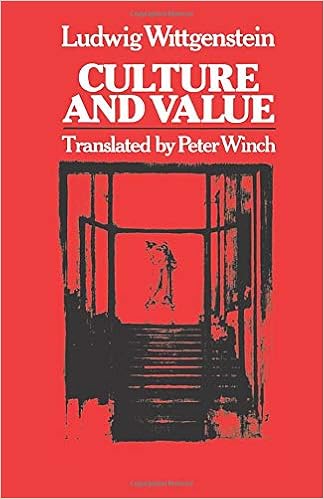
2 | Culture and Value by Ludwig Wittgenstein

My second book this year read more like a notebook than anything else, and, in a sense, it was. Peter Winch, the translator, offered a superb introduction, letting the reader know that the book was a compilation of notes ranging over a period of several years in Wittgenstein's works.

I have been wanting to read this book since my second semester of graduate school: One of my professors quoted it, saying, "This is how philosophers should salute each other: Take your time!" Wittgenstein's quote struck me as profound that day, and I have wanted to read it in context ever since.

CULTURE AND VALUE | LUDWIG WITTGENSTEIN


It is hard to offer a summary of this book; it covers a broad range of topics, and there is no clear connection (as far as I can tell) between the different ideas. Some topics that stand out in my mind are Wittgenstein's fascination with the compositions of Schubert and music in general, thoughts on teaching and thinking, and the complicated nature of religion---particularly, Christianity.

One quote that stood out to me as I read was toward the middle of the work:
“I believe one of the things Christianity says is that sound doctrines are all useless. That you have to change your life. (Or the direction of your life.) It says that wisdom is all cold; and that you can no more use it for setting your life straight than you can forge iron when it is cold. The point is that a sound doctrine need not take hold of you; you can follow as you would a doctor’s prescription. — But here you need something to love you and turn you in a new direction. ... Wisdom is passionless. But faith by contrast is what Kierkegaard calls a passion.”

It is interesting to take these quotes out of context. What was Wittgenstein experiencing as he wrote? Having not studied Wittgenstein very intensively in the past, all I can do is speculate and hope for a day when I have time to find answers to this question. Helpfully, Peter Winch orders the comments chronologically. One interesting thing I noticed as I progressed through the book was that the farther I read, the more references to music and religion I uncovered. I wonder how this is significant considering the life of Wittgenstein. Alas, questions for another day.

On the whole, what I feel I most gained on my first reading of this book is insight into the mind of a great thinker. His mind bounces around from topic to topic, too. He is stumped by impossible questions, too. These are comforting realizations.

Conclusion:
Need to read again. Would recommend to certain friends. 7/10.

1 | Letters to the Church by Francis Chan

2019 was a full year: I completed graduate school, remodeled a bathroom, became an adjunct instructor, and had a baby! I am hoping that 2020 will bring more rest and time for leisure, in the classical sense of the word. Since my son was born, I have found myself with less time for reading as well as less mental acuity to take in the same level of content I had been consuming prior to giving birth--sleepless nights really take it out of you!

To help break through the sleepy haze I have found myself in, I set a goal to read one book each week in 2020: 52 books over 52 weeks. As a way to keep track of my goal and to stimulate thoughtful consumption of the literature I take in, I am going (hopefully) to write about each book I read. I aim to include a synopsis and critique of all 52 books I read this year.

I know what you're saying, whoever you are: Jenn, it is January 31st! You are so behind on your reading! Well, the good news is I have already completed 5 books this year! So, for the next few days, I am going to try and blast out 5 blogs to get caught up on my critiques. My first 5 posts will probably be shorter for that reason, and my reading responses will hopefully get longer when I get caught up.

One thing that will be fun to me and probably uninteresting to anyone else who may accidentally stumble across this blog is that I do not plan to stick to one genre of books. I want to read some philosophy (my area of study), theology, fiction, history...you get the idea!

Now that I have established my plan, let's get to our first book!

LETTERS TO THE CHURCH | FRANCIS CHAN

Image result for letters to the church chan


Have you read Francis Chan before? When I was a junior or senior in high school, I read Crazy Love. The thing that stood out to me about my first exposure to Chan was how well he set up his call to action. I really wanted to make changes in my life when I finished reading CL. When I picked up Letters to the Church--actually my husband picked it up on his lunch break one day to read with me--I expected it to have a similar effect.

Chan wrote about his experience leaving Cornerstone, living overseas and experiencing church in Asia, and returning home with a call to begin a church planting network. The question that rose to the surface as he discussed all of this was "What does the Bible say Church should be, and why do our churches look so different from this?"

Among his many answers, the one that was the most profound in my mind follows: The Bible teaches that unbelievers will be drawn in by the love Christians have for one another. Therefore, our churches ought to be marked by the love of Christ. How does the love we see in churches stand out from the love we see in other parts of society? Consider the following acts of love: providing a meal for a friend who just had a baby, calling a friend you know is going through a hard time, telling your friend when they have broccoli stuck in between their teeth... Okay--the last one is a joke, but you get the idea. These are acts of love that are experienced both inside and outside of Church. These acts of love, while genuine and beneficial, must not be examples of the kind of love we are being called to, as believers; instead, we are being called to show a much more sacrificial love--the kind of love that is willing to die completely to self.

I left this book feeling challenged to give more of myself in love to others. I left this book feeling inspired to find a deeper understanding of Christ's sacrifice for me, for us. I left this book with the desire to share the same love that has been shown to me.

Overall, I give this book high praise; however, I do have to critiques. First, this book was obviously written by a speaker. From small grammatical errors to the overuse of exclamation points and italics, I was thankful to be reading this book aloud with my husband, instead of just reading it to myself. Second, I felt like most of the concepts explored and advice offered, while profound and biblical, was primarily abstract. Although I left inspired toward change, I felt stumped about what those particular changes ought to be. This could have been deliberate on the part of Chan; perhaps he desires for his readers to seek God themselves to uncover where Christ's love can shine more brightly in their particularities.

Conclusion:
Would read again. Would (and already have) recommend to a friend. 8/10.